
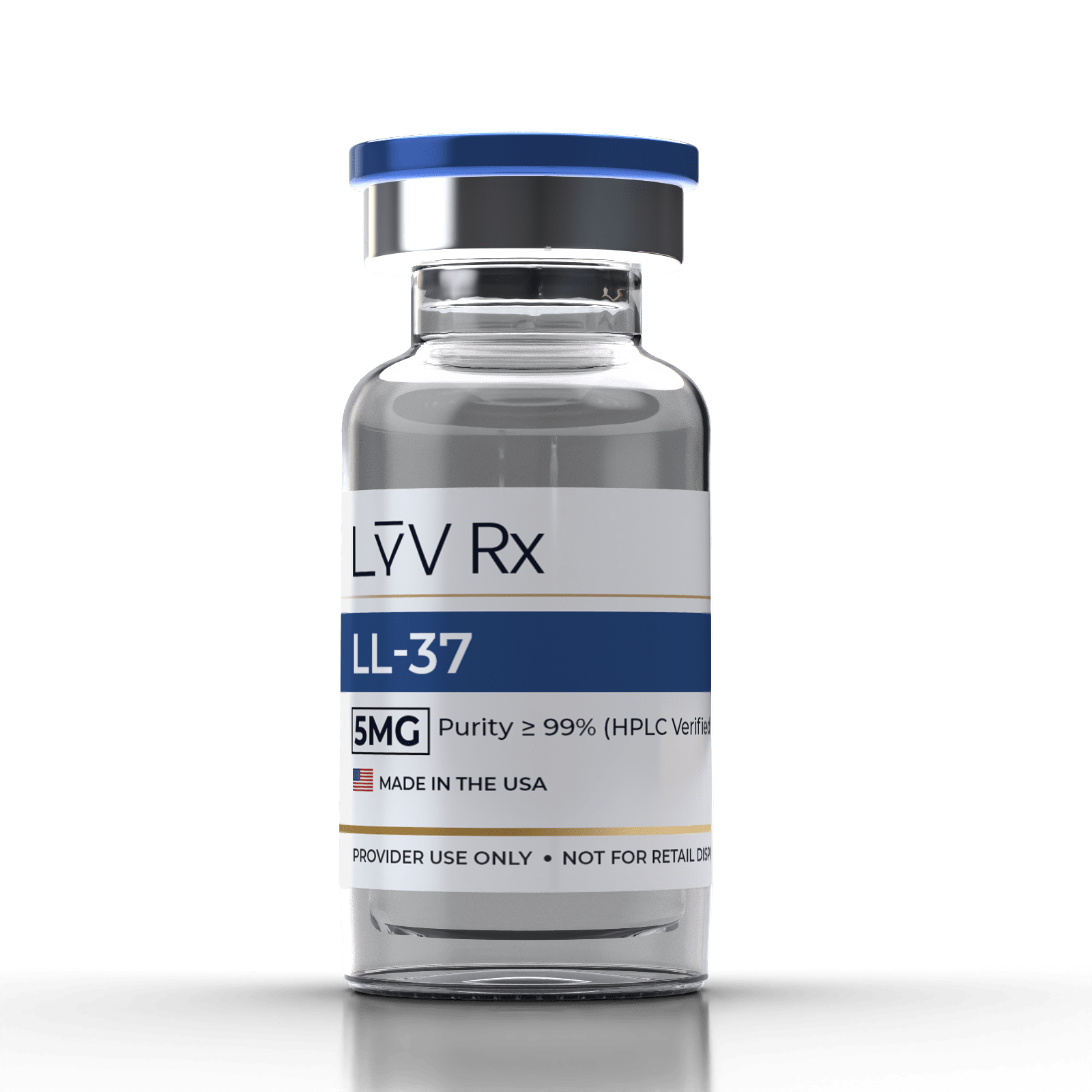
LL-37
$84.99 — or $76.49 / month
LL-37 is a cationic 37-amino-acid host defense peptide derived from the human cathelicidin antimicrobial peptide (CAMP) precursor that is studied for its role in innate immune signaling and barrier function.
Only 9 left in stock
Origin & Classification
LL-37 is a 37-amino-acid peptide produced by proteolytic cleavage of the human cathelicidin antimicrobial peptide precursor hCAP18. It is expressed by epithelial cells and neutrophils in response to infection and inflammatory stimuli. Synthetic LL-37 for research is produced via solid-phase peptide synthesis, generating a linear alpha-helical peptide that belongs to the class of host defense peptides, also known as antimicrobial peptides.
Mechanism & Research Context
LL-37 exerts multiple functions in the immune system. It can disrupt bacterial membranes through its amphipathic structure, directly killing microbes, and it modulates immune responses by binding to pattern recognition receptors and cell membranes. Researchers investigate LL-37’s interactions with formyl peptide receptors, Toll-like receptors, and purinergic receptors, examining downstream signaling cascades including NF-kappaB, MAPK, and inflammasome activation. The peptide also influences chemotaxis, angiogenesis, wound healing, and regulation of cytokine production. Studies explore its role in bridging innate and adaptive immunity, mucosal barrier function, and the modulation of inflammatory and autoimmune processes. LL-37 provides a versatile model for probing the complex functions of host defense peptides.
Composition & Quality
LL-37 is supplied as a lyophilized powder with purity typically above 95 % as confirmed by analytical HPLC and mass spectrometry. The peptide is synthesized under GMP-aligned conditions, followed by endotoxin testing, sterility assessment, and structural characterization using circular dichroism. Due to its cationic nature and potential to aggregate, careful handling and reconstitution in suitable buffers are recommended. Certificates of analysis detail peptide sequence, purity, and recommended storage conditions, including refrigeration of lyophilized product and avoidance of repeated freeze-thaw cycles after reconstitution.
Summary & Unified Disclaimer
This description summarizes the scientific context of the molecule. It is provided for educational and research discussion purposes only. It is not intended to diagnose, treat, cure, or prevent any disease, and no medical or consumption claims are made.
| Weight | 0.05 lbs |
|---|---|
| Dimensions | 1 × 1 × 2 in |
How Lyv Rx Works
Place Your Order
Enjoy our simple and secure shopping experience
Get medical approval
Our licensed physicians review every order placed
Optimize your health
Each order is shipped same-day to keep you moving
Reviews
There are no reviews yet.