
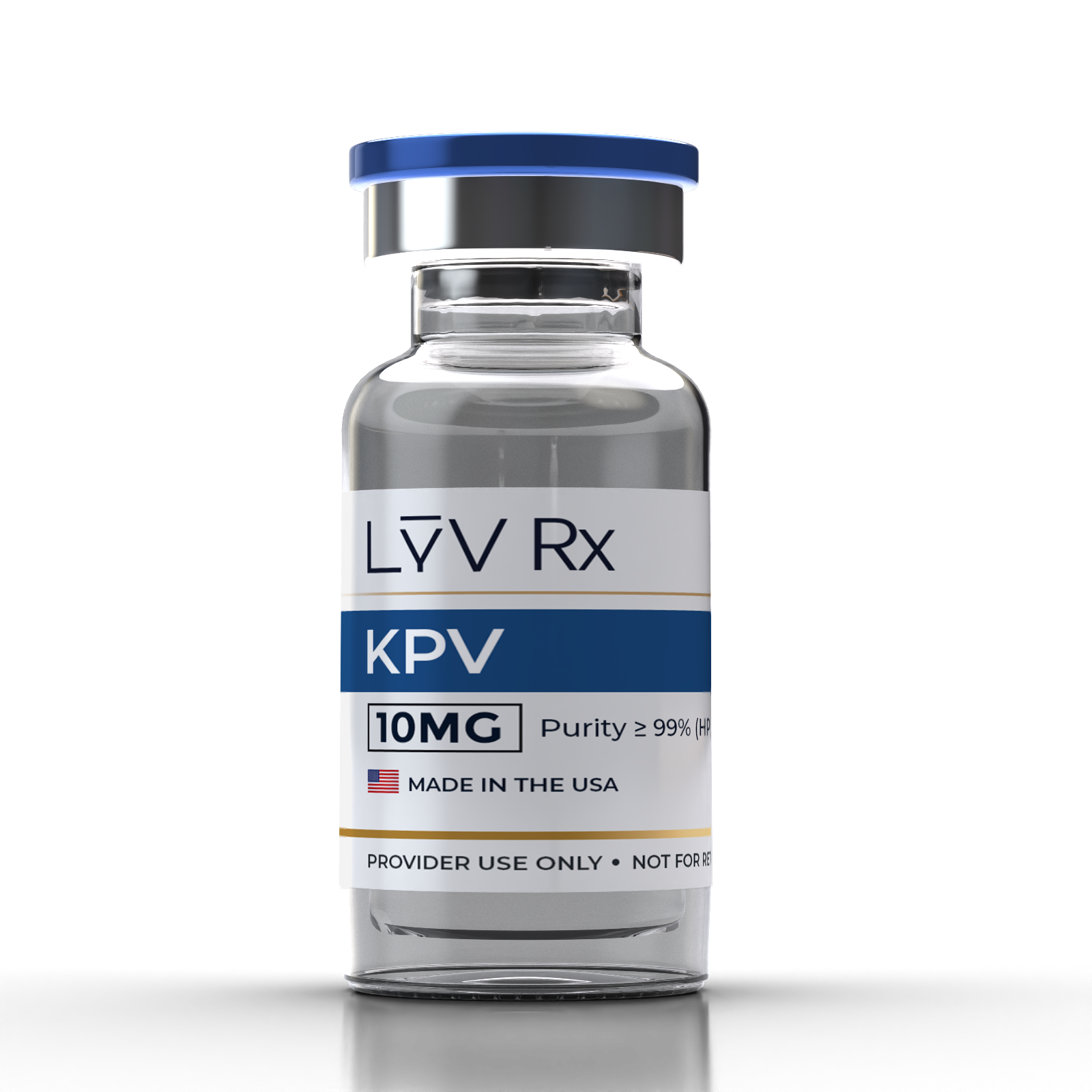
KPV
$99.00 — or $89.10 / month
KPV is a synthetic tripeptide corresponding to the C-terminal fragment of alpha-melanocyte-stimulating hormone that interacts with melanocortin receptors and is studied for its role in inflammatory and pigmentary signaling.
Only 10 left in stock
Origin & Classification
The KPV peptide comprises three amino acids-lysine, proline, and valine-representing the C-terminal fragment of the endogenous hormone alpha-melanocyte-stimulating hormone (alpha-MSH). Synthetic KPV is produced via solid-phase peptide synthesis, generating a linear tripeptide that is not glycosylated. It belongs to the class of melanocortin receptor ligands and is distinct from full-length alpha-MSH in that it has a narrower receptor interaction profile.
Mechanism & Research Context
KPV is known to interact with melanocortin receptors, particularly MC1R, which are expressed on melanocytes, keratinocytes, and immune cells. Activation of MC1R leads to cAMP production and downstream signaling via protein kinase A, resulting in increased expression of genes involved in melanin synthesis and modulation of inflammatory responses. Researchers use KPV to study mechanisms of pigmentation, inflammatory signal modulation, and barrier function. Investigations extend to analyses of NF-kappaB inhibition, modulation of pro-inflammatory cytokine production (e.g., TNF-alpha, IL-1beta), and interactions with nitric oxide synthase pathways. The tripeptide serves as a tool to elucidate melanocortin signaling and its cross-talk with immune and oxidative stress pathways.
Composition & Quality
KPV is supplied as a lyophilized powder with purity typically above 95 % as determined by reverse-phase HPLC and confirmed by mass spectrometry. Manufacturing processes adhere to GMP-aligned standards, and quality control includes peptide identity verification, endotoxin testing, and sterility assessment. The peptide exhibits stability when stored desiccated at low temperatures. Reconstitution in aqueous buffers should be performed under sterile conditions, and certificates of analysis accompany each batch to document analytical characteristics.
Summary & Unified Disclaimer
This description summarizes the scientific context of the molecule. It is provided for educational and research discussion purposes only. It is not intended to diagnose, treat, cure, or prevent any disease, and no medical or consumption claims are made.
| Weight | 0.05 lbs |
|---|---|
| Dimensions | 1 × 1 × 2 in |
How Lyv Rx Works
Place Your Order
Enjoy our simple and secure shopping experience
Get medical approval
Our licensed physicians review every order placed
Optimize your health
Each order is shipped same-day to keep you moving
Reviews
There are no reviews yet.