
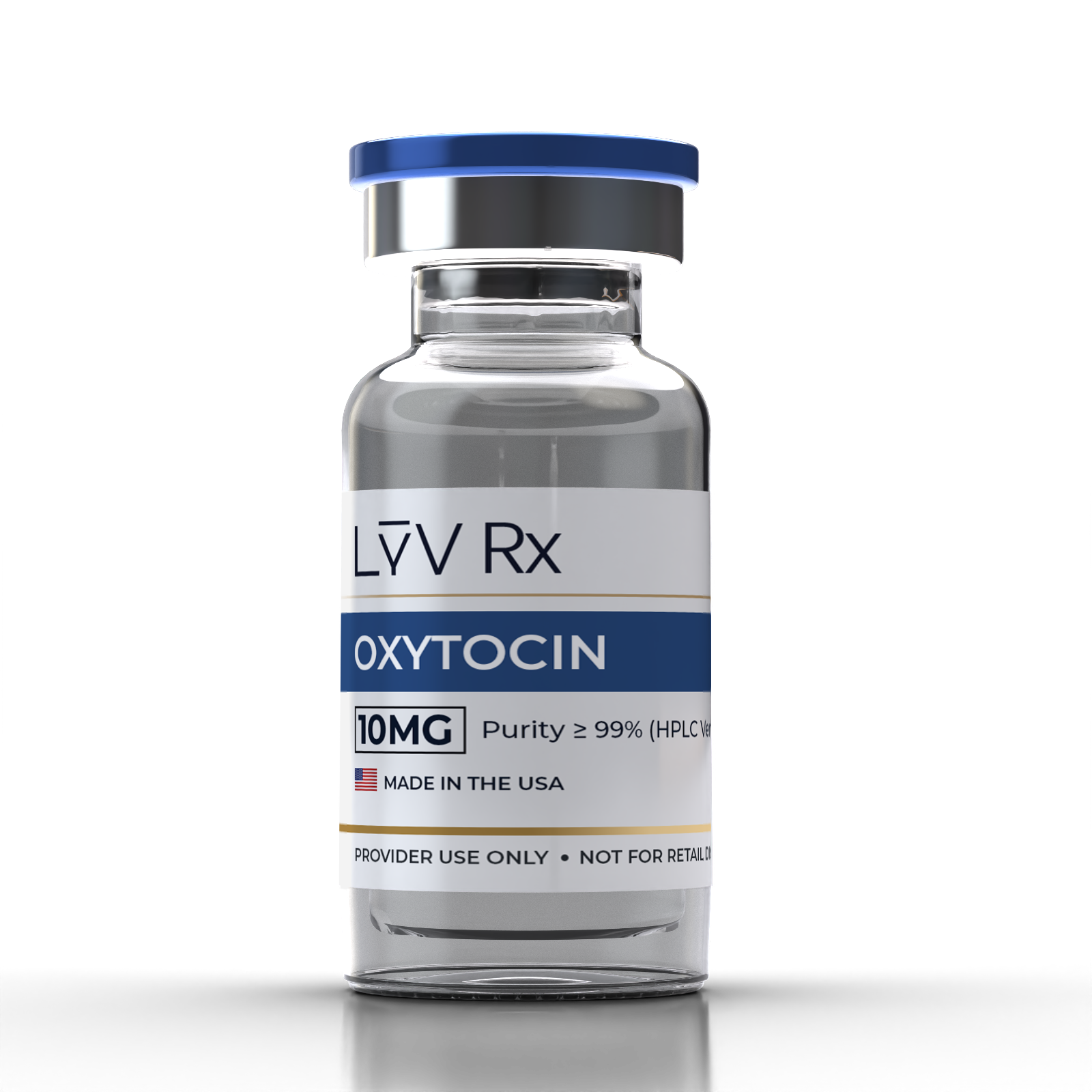
Oxytocin
$66.99 — or $60.29 / month
Oxytocin is a nine-amino-acid neuropeptide hormone synthesized in the hypothalamus and is studied in research exploring social bonding, reproductive physiology, and stress response signaling.
In stock
Origin & Classification
Oxytocin is an endogenous nonapeptide composed of nine amino acids, including a cysteine-cysteine disulfide bond that forms a cyclic structure. Synthesized in the paraventricular and supraoptic nuclei of the hypothalamus, it is transported to the posterior pituitary for release into circulation. Synthetic oxytocin used in research replicates this sequence and is produced via solid-phase peptide synthesis. It belongs to the class of neurohypophysial hormones, structurally related to vasopressin.
Mechanism & Research Context
Oxytocin binds to the oxytocin receptor (OXTR), a G protein-coupled receptor expressed in the uterus, mammary glands, brain, and heart. Activation of OXTR stimulates phospholipase C, leading to inositol triphosphate-mediated calcium mobilization and protein kinase C activation. In reproductive physiology, oxytocin is known to mediate uterine contractions and milk ejection. In neuroscience, it is studied for its roles in social cognition, pair bonding, and modulation of anxiety and stress responses. Researchers examine how oxytocin interacts with dopaminergic, serotonergic, and GABAergic systems, and how it influences signaling pathways in regions such as the amygdala and nucleus accumbens. The hormone is also used to study interactions with the hypothalamic-pituitary-adrenal axis and cardiovascular regulation. All explorations focus on mechanistic insights rather than therapeutic claims.
Composition & Quality
Synthetic oxytocin is supplied as a lyophilized powder or aqueous solution with purity generally above 95 %. It is produced under GMP-aligned conditions with purification by reverse-phase HPLC and characterization by mass spectrometry. Quality control includes assays for peptide content, sequence verification, and assessment of endotoxin levels. The peptide is sensitive to oxidation; thus, handling guidelines recommend the use of buffers containing antioxidants and proper storage at low temperatures. Certificates of analysis accompany each batch and provide details on purity, identity, and stability.
Summary & Unified Disclaimer
This description summarizes the scientific context of the molecule. It is provided for educational and research discussion purposes only. It is not intended to diagnose, treat, cure, or prevent any disease, and no medical or consumption claims are made.
| Weight | 0.05 lbs |
|---|---|
| Dimensions | 1 × 1 × 2 in |
How Lyv Rx Works
Place Your Order
Enjoy our simple and secure shopping experience
Get medical approval
Our licensed physicians review every order placed
Optimize your health
Each order is shipped same-day to keep you moving
Reviews
There are no reviews yet.