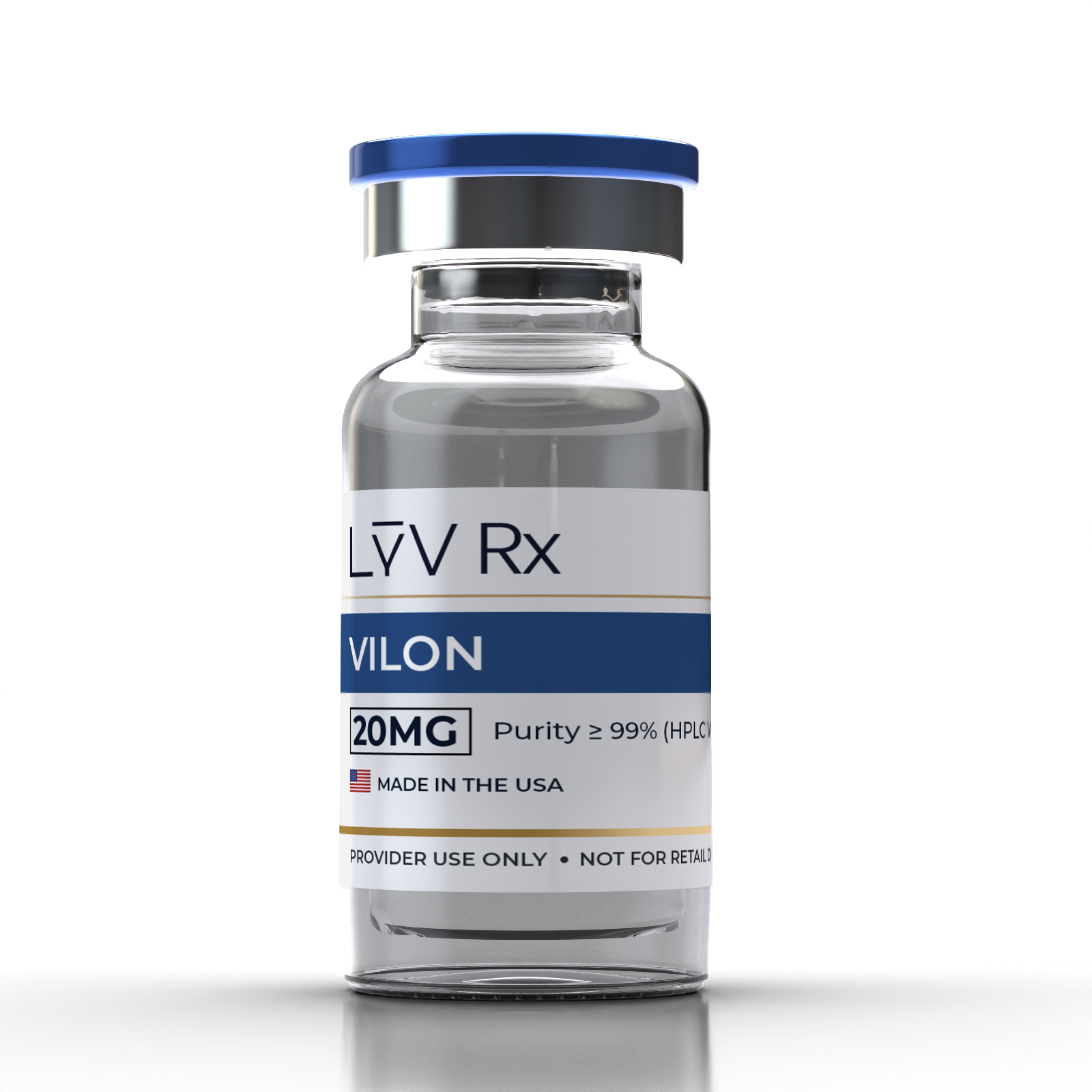
Vilon
$105.99 — or $95.39 / month
Vilon is a dipeptide bioregulator comprising glutamic acid and lysine designed to mirror motifs found in thymic peptides and is studied for its role in immune and neuroendocrine regulation.
In stock
Origin & Classification
Vilon is a synthetic dipeptide with the sequence Glu-Lys, derived from structural motifs identified in thymic peptides that regulate gene expression. It belongs to the family of cytomedins and is synthesized using solid-phase peptide synthesis. The small size of Vilon allows it to permeate cells and potentially interact with nuclear components.
Mechanism & Research Context
Researchers employ Vilon to investigate the modulation of gene expression in immune and neuroendocrine systems. Studies suggest that small peptides may influence chromatin structure or transcription factors, thereby regulating genes involved in cytokine production, neurotrophic factors, and stress responses. Investigations into Vilon focus on pathways such as NF-kappaB, CREB, and caspase-mediated apoptosis, as well as the peptide’s potential effects on neuronal survival and differentiation. By studying these mechanisms, scientists aim to understand how dipeptide signals contribute to homeostatic regulation across multiple systems without inferring therapeutic outcomes.
Composition & Quality
Vilon is provided as a lyophilized powder with purity greater than 95 %, as confirmed by HPLC and mass spectrometry. Production follows GMP-aligned protocols, with quality control measures including verification of peptide identity, endotoxin testing, and sterility assessment. The dipeptide is stable when stored desiccated at low temperatures, and reconstitution in sterile aqueous solutions is recommended for experimental use. Certificates of analysis detail the sequence, purity, and recommended storage conditions.
Summary & Unified Disclaimer
This description summarizes the scientific context of the molecule. It is provided for educational and research discussion purposes only. It is not intended to diagnose, treat, cure, or prevent any disease, and no medical or consumption claims are made.
| Weight | 0.05 lbs |
|---|---|
| Dimensions | 1 × 1 × 2 in |
How Lyv Rx Works
Place Your Order
Enjoy our simple and secure shopping experience
Get medical approval
Our licensed physicians review every order placed
Optimize your health
Each order is shipped same-day to keep you moving
Reviews
There are no reviews yet.