
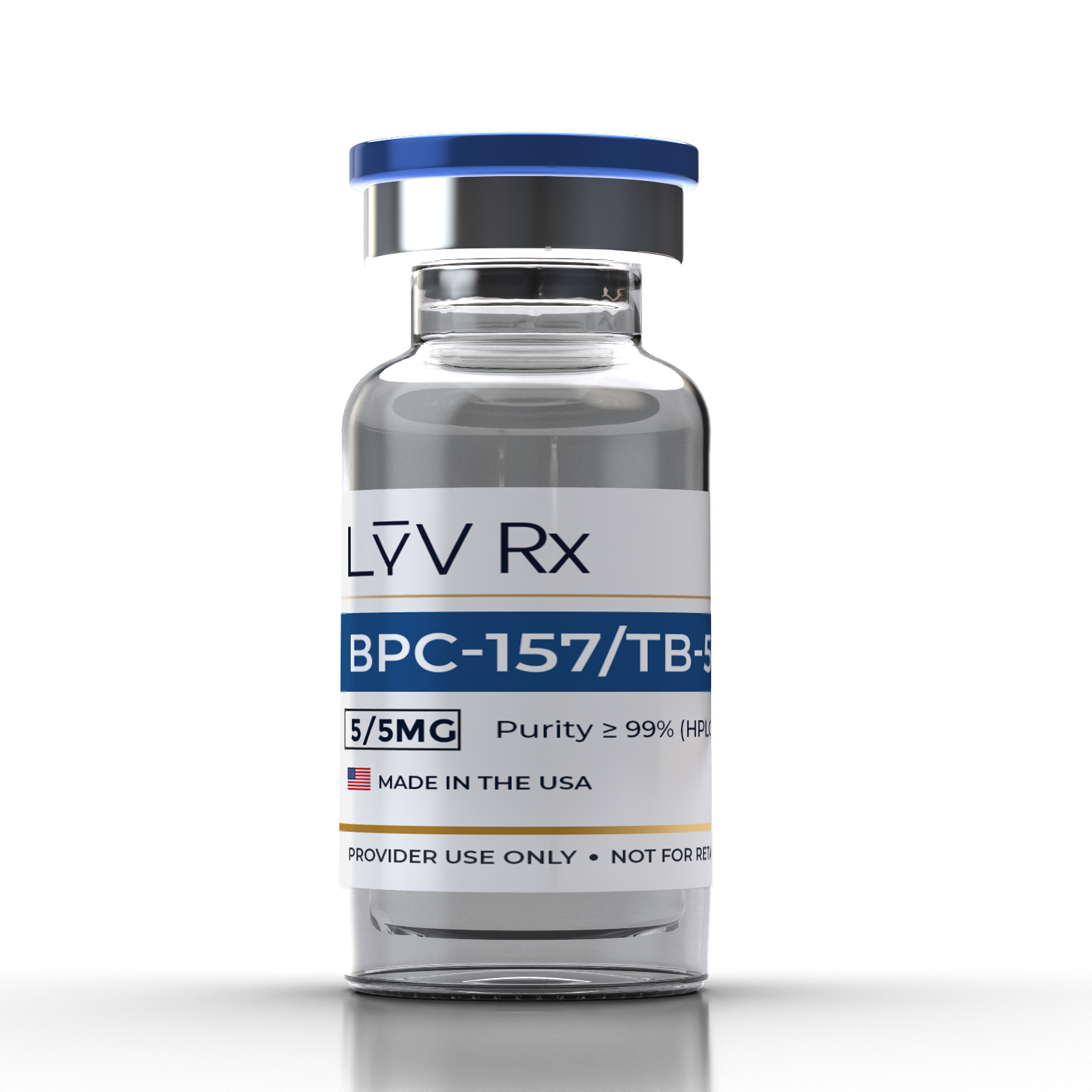
BPC-157/TB-500
$69.99 — or $62.99 / month
BPC-157/TB-500 is a dual-peptide research kit combining the cytoprotective pentadecapeptide BPC-157 with the thymosin beta-4 fragment TB-500 to study complementary signaling pathways in tissue biology.
Only 6 left in stock
Origin & Classification
The BPC-157/TB-500 combination is a research kit containing two distinct peptides. BPC-157 is a synthetic 15-amino-acid fragment derived from human gastric body protection compound, while TB-500 is a synthetic version of a fragment of thymosin beta-4, a naturally occurring peptide involved in cell migration. TB-500 comprises 43 amino acids and includes the active sequence that interacts with actin. Both peptides are synthesized separately via solid-phase peptide synthesis and formulated together for investigative use.
Mechanism & Research Context
This dual-peptide kit allows researchers to study overlapping but distinct biological pathways. BPC-157 is explored for its influence on nitric oxide and angiogenic signaling, while TB-500 is examined for its capacity to bind actin monomers and promote cytoskeletal rearrangement. TB-500’s interactions with G-actin are linked to processes such as wound repair, cell migration, and extracellular matrix remodeling. In combination, the peptides provide a platform to investigate coordinated signaling networks involving endothelial cells, fibroblasts, and immune cells. Researchers may assess how the peptides modulate growth factors (VEGF, TGF-beta), adhesion molecules, and inflammatory mediators in the context of tissue integrity. The kit is intended for system biology research rather than for therapeutic conclusions.
Composition & Quality
The BPC-157 and TB-500 peptides are supplied as separate vials of lyophilized powder or combined in a single vial depending on formulation. Both peptides are produced under GMP-aligned conditions with purity levels exceeding 95 % as established by HPLC and mass spectrometry. Each batch undergoes sterility and endotoxin testing, as well as amino acid analysis to verify sequence fidelity. The kit includes instructions for reconstitution in sterile water or saline for laboratory use. Certificates of analysis document identity, purity, and storage conditions.
Summary & Unified Disclaimer
This description summarizes the scientific context of the molecule. It is provided for educational and research discussion purposes only. It is not intended to diagnose, treat, cure, or prevent any disease, and no medical or consumption claims are made.
| Weight | 0.05 lbs |
|---|---|
| Dimensions | 1 × 1 × 2 in |
How Lyv Rx Works
Place Your Order
Enjoy our simple and secure shopping experience
Get medical approval
Our licensed physicians review every order placed
Optimize your health
Each order is shipped same-day to keep you moving
Reviews
There are no reviews yet.