
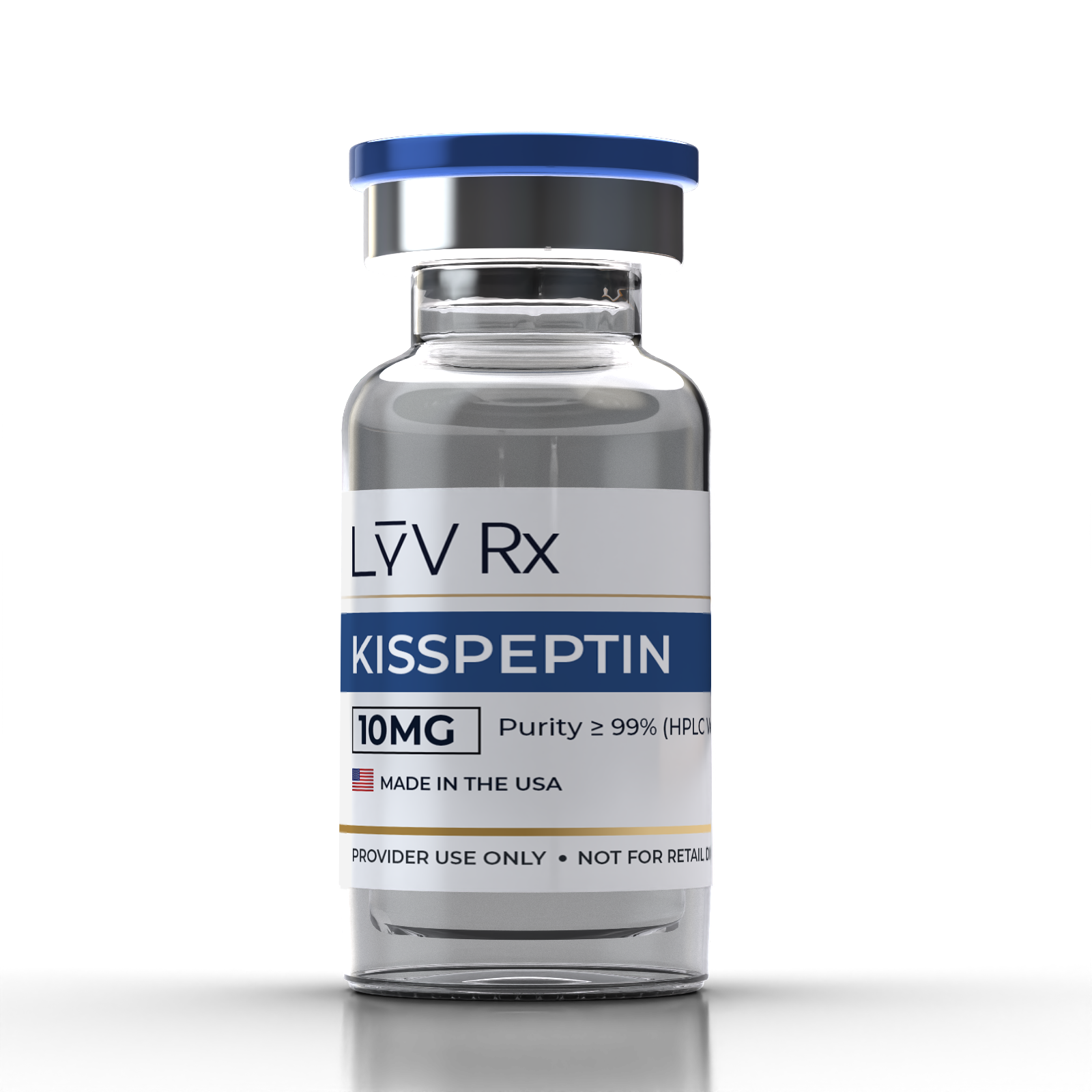
Kisspeptin
$75.99 — or $68.39 / month
Kisspeptin is a family of neuropeptide fragments derived from the KISS1 gene product that act on the GPR54 receptor and are studied for their role in hypothalamic regulation of gonadotropin release.
In stock
Origin & Classification
Kisspeptins are a group of peptides cleaved from the KISS1 gene product, originally identified for their metastatic suppressor role in melanoma. The peptides vary in length, with active forms including 54-, 14-, and 10-amino-acid sequences; the synthetic forms used in research typically correspond to kisspeptin-10 or kisspeptin-54. These peptides are generated via solid-phase synthesis and belong to the class of neuroendocrine regulatory peptides.
Mechanism & Research Context
Kisspeptin peptides bind to the G protein-coupled receptor GPR54 (also known as KISS1R), primarily expressed in hypothalamic neurons that regulate reproductive hormone secretion. Activation of GPR54 induces phospholipase C signaling, leading to inositol triphosphate-mediated calcium release and subsequent activation of GnRH neurons. Researchers use kisspeptin to study the central control of puberty onset, ovulation, and feedback regulation of gonadotropins. Investigations extend to interactions with leptin, neurokinin B, and estrogen receptors, exploring how kisspeptin integrates metabolic and reproductive signals. Beyond reproductive endocrinology, the KISS1/KISS1R system is examined for roles in metastasis suppression, placental development, and cardiovascular regulation, providing a broad context for mechanistic research.
Composition & Quality
Synthetic kisspeptin peptides are supplied as lyophilized powders with purity levels exceeding 95 %, as determined by HPLC and mass spectrometry. They are produced under GMP-aligned conditions, with subsequent quality assurance testing including peptide sequence verification, endotoxin assessment, and sterility testing. The peptides are typically soluble in aqueous buffers, and recommended storage conditions involve refrigeration of lyophilized material and protection from repeated freeze-thaw cycles after reconstitution. Certificates of analysis accompany each batch, detailing sequence information and analytical data.
Summary & Unified Disclaimer
This description summarizes the scientific context of the molecule. It is provided for educational and research discussion purposes only. It is not intended to diagnose, treat, cure, or prevent any disease, and no medical or consumption claims are made.
| Weight | 0.05 lbs |
|---|---|
| Dimensions | 1 × 1 × 2 in |
How Lyv Rx Works
Place Your Order
Enjoy our simple and secure shopping experience
Get medical approval
Our licensed physicians review every order placed
Optimize your health
Each order is shipped same-day to keep you moving
Reviews
There are no reviews yet.