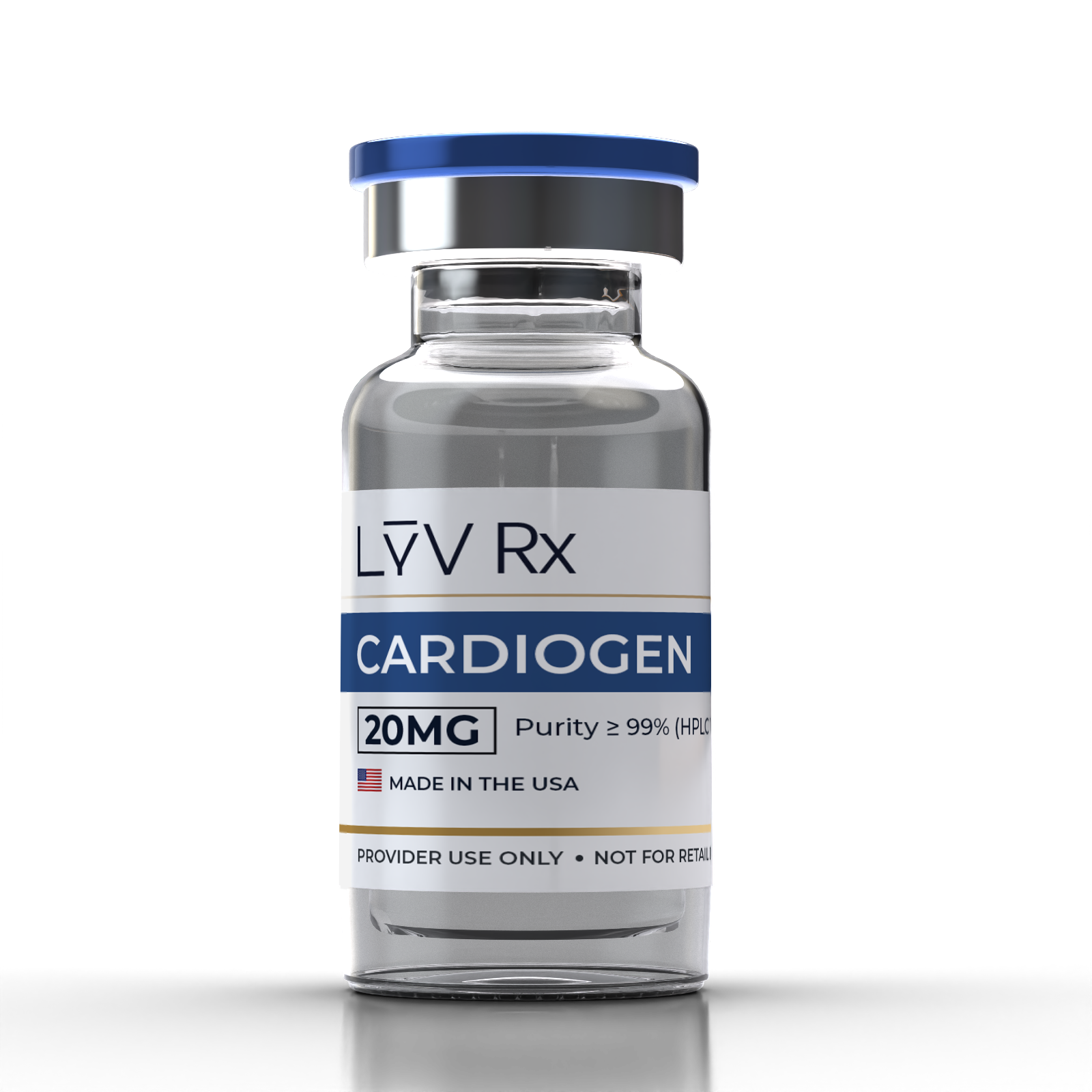
Cardiogen
$84.99 — or $76.49 / month
Cardiogen is a peptide complex derived from heart tissue sequences studied in cardiac signaling and gene regulation research.
In stock
Origin & Classification
Cardiogen is a research formulation composed of short peptide fragments derived from specific amino acid sequences found in cardiac tissue regulatory proteins. These peptides, typically two to three amino acids long, are synthesized by solid-phase peptide synthesis to mimic the regulatory motifs within myocyte transcription factors and structural proteins. The formulation is conceptualized to provide cell-permeable dipeptide and tripeptide sequences that belong to the family of tissue-specific cytomedins.
Mechanism & Research Context
In experimental studies, Cardiogen peptides are used to investigate gene expression patterns and signaling cascades within cardiac cells. The peptides are hypothesized to enter the cell nucleus and interact with chromatin or transcription factors, thereby influencing the transcription of genes involved in cardiomyocyte function, calcium handling, and oxidative phosphorylation. Research utilizes Cardiogen to probe how small regulatory peptides may modulate pathways such as MAPK/ERK, PGC-1alpha signaling, and mitochondrial biogenesis in the context of cardiac stress, development, and aging. This approach provides insights into systems-level mechanisms of cardiac gene regulation and bioenergetics without attributing therapeutic benefits.
Composition & Quality
Cardiogen is typically supplied as a lyophilized powder containing one or more purified peptide sequences with masses in the range of 500-1000 Da. Production adheres to GMP-aligned peptide synthesis methods, and each peptide component undergoes purification by high-pressure liquid chromatography to attain a purity greater than 95 %. Quality control includes mass spectrometric verification, quantitative amino acid analysis, sterility testing, and stability assessments. The final formulation is recommended to be stored in desiccated conditions at low temperature, with reconstitution in sterile water or buffered saline for experimental use.
Summary & Unified Disclaimer
This description summarizes the scientific context of the molecule. It is provided for educational and research discussion purposes only. It is not intended to diagnose, treat, cure, or prevent any disease, and no medical or consumption claims are made.
| Weight | 0.05 lbs |
|---|---|
| Dimensions | 1 × 1 × 2 in |
How Lyv Rx Works
Place Your Order
Enjoy our simple and secure shopping experience
Get medical approval
Our licensed physicians review every order placed
Optimize your health
Each order is shipped same-day to keep you moving
Reviews
There are no reviews yet.