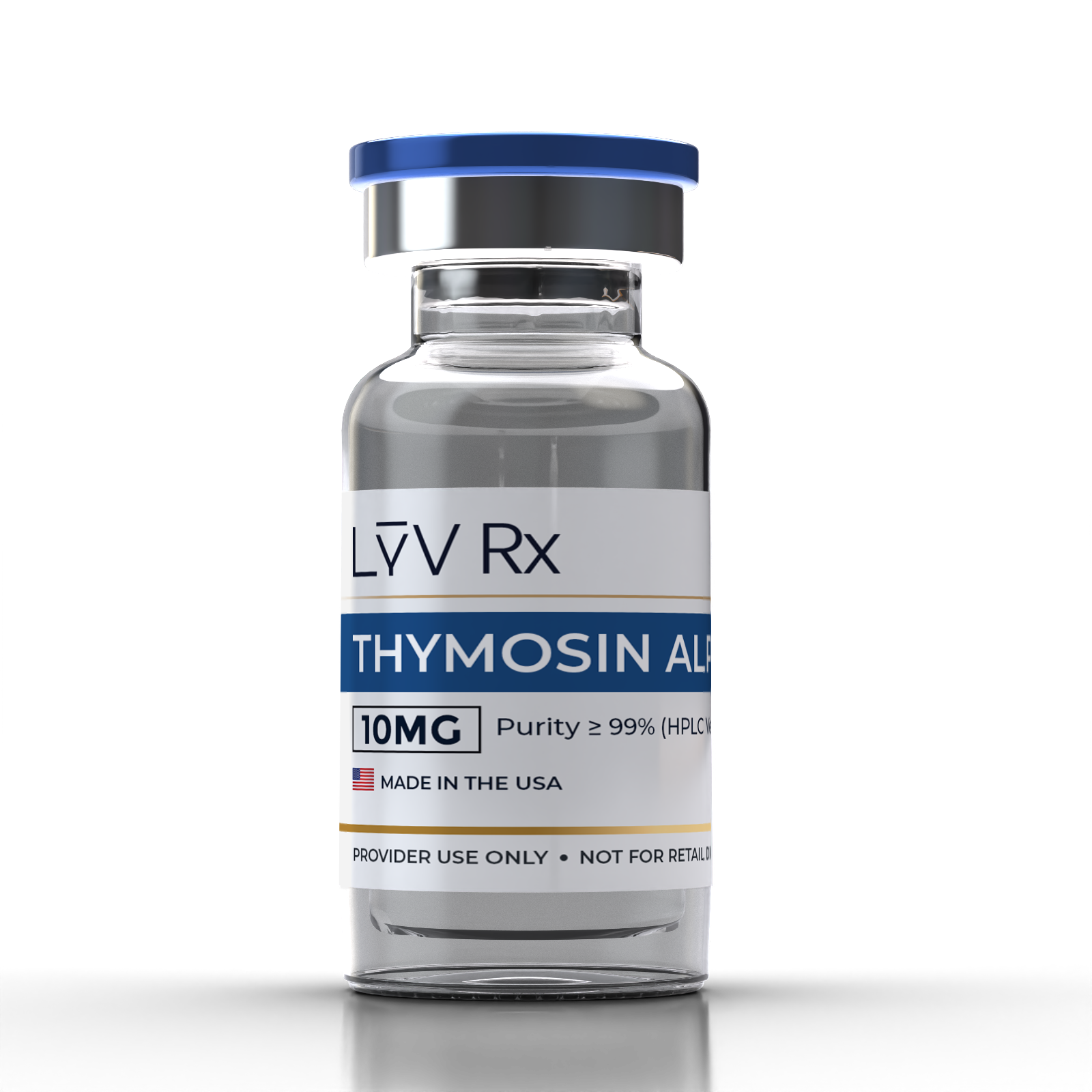
Thymosin Alpha 1
$93.99 — or $84.59 / month
Thymosin alpha1 is a 28-amino-acid peptide processed from the prothymosin alpha precursor that is studied for its involvement in T-cell maturation and immune modulation pathways.
In stock
Origin & Classification
Thymosin alpha1 (Talpha1) is a 28-amino-acid peptide originally isolated from thymic tissue. It is derived from the C-terminal region of prothymosin alpha and is produced endogenously in the thymus. Synthetic Talpha1 used in research is manufactured via solid-phase peptide synthesis or recombinant expression. It belongs to the class of thymic peptides with immunomodulatory properties.
Mechanism & Research Context
Thymosin alpha1 is known to interact with toll-like receptors (TLR) and to influence dendritic cell maturation and T-cell differentiation. Research focuses on how Talpha1 modulates signaling pathways involving NF-kappaB, IRF3, and STATs, leading to changes in cytokine production, antigen presentation, and immune cell proliferation. Studies explore its effects on the balance between Th1 and Th2 responses, activation of natural killer cells, and modulation of interferon-stimulated genes. Talpha1 is also investigated for its ability to influence oxidative stress responses and mitochondrial function in immune cells. This mechanistic research aims to map the role of thymic peptides in immune regulation without implying therapeutic action.
Composition & Quality
Thymosin alpha1 is supplied as a lyophilized peptide with purity typically above 95 %, as measured by HPLC and mass spectrometry. It is produced under GMP-aligned conditions, with purification, sterile filtration, and quality control steps to confirm peptide identity, purity, and absence of endotoxin. Stability guidelines suggest storage at low temperature in lyophilized form and prompt use after reconstitution. Certificates of analysis accompany each batch, providing details on sequence, purity, and recommended storage.
Summary & Unified Disclaimer
This description summarizes the scientific context of the molecule. It is provided for educational and research discussion purposes only. It is not intended to diagnose, treat, cure, or prevent any disease, and no medical or consumption claims are made.
| Weight | 0.05 lbs |
|---|---|
| Dimensions | 1 × 1 × 2 in |
How Lyv Rx Works
Place Your Order
Enjoy our simple and secure shopping experience
Get medical approval
Our licensed physicians review every order placed
Optimize your health
Each order is shipped same-day to keep you moving
Reviews
There are no reviews yet.